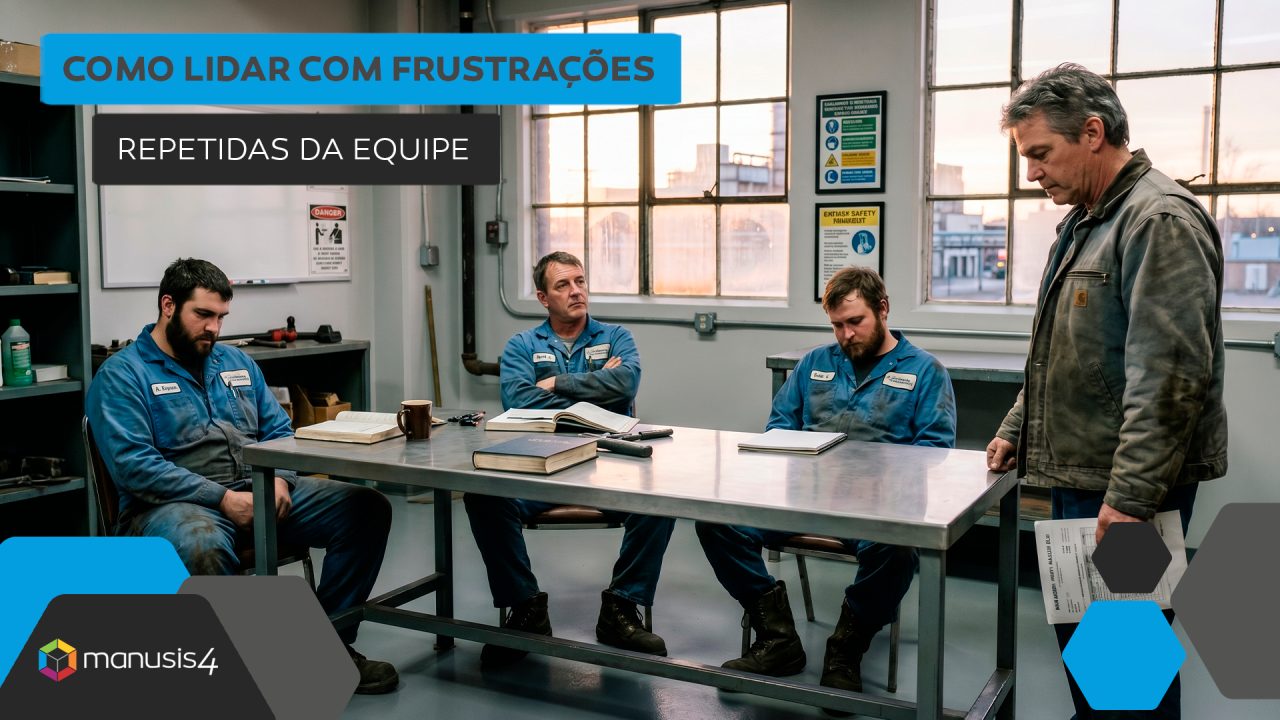
🌀 When the team stops believing, and nobody says a word
In many maintenance teams, there comes a moment when something changes.
It isn't a fight.
It isn't someone getting fired.
It isn't a visible crisis.
It's something much subtler, and much more dangerous:
The team stops believing.
You notice signs that seem small:
- The meeting turns into the leader's monologue
- The suggestions disappear
- The looks go blank
- The smiles disappear from the coffee break
- The most common phrase becomes: "whatever"
And when someone proposes something new, someone answers:
👉 "They've tried that. It didn't work."
That phrase is the clearest symptom of a diagnosis that's rarely named:
Collective cynicism.
And it grows from a silent root: repeated frustration.
Why is maintenance especially vulnerable to this pattern?
Think about the typical path of a technical team:
- It has seen countless projects promised and abandoned
- It has seen systems rolled out and never used
- It has seen training with no follow-through
- It has seen targets change overnight
- It has seen leaders arrive full of plans and leave without finishing anything
- It has seen promises of recognition turn into silence
And every one of those times left a mark.
Not in a document. Not in a KPI.
But in the department's collective emotional memory.
And that memory starts working as a filter:
👉 Everything new that arrives gets interpreted through the history of what didn't work.
It isn't ill will.
It isn't resistance.
It's accumulated emotional self-protection.
What NLP shows us about repeated frustration
Neuro-Linguistic Programming is blunt on this point:
The human brain looks for patterns to protect itself from pain.
When something painful keeps happening:
- the mind generalizes
- expectations adjust downward
- engagement becomes a risk
- hope becomes a threat
And a silent sentence is born that governs the team:
👉 "It's safer not to believe."
That mechanism isn't a defect.
It's evolutionary protection.
The problem is that this protection, taken to the extreme, kills the team from the inside.
Collective cynicism is like maintenance nobody sees:
- it preserves the structure
- but destroys the ability to operate with life.
The invisible costs of a team that has stopped believing
When cynicism sets in:
- New ideas die before they're spoken
- Leaders feel betrayed by the team's coldness
- Good teams turn into mediocre teams within a few months
- The best technicians quit without making a fuss
- Innovation disappears and nobody can explain why
- KPIs plateau and nobody understands why
And the most serious symptom:
👉 The team delivers the minimum, because it believes anything more is a waste of energy.
It isn't a lack of motivation.
It's chronic self-protection disguised as professionalism.
Where does Manusis4 come in as an ally in this turnaround?
Here, technology does something that words alone can't:
It shows concrete evidence that things really are changing.
How?
✔️ Month-over-month comparative KPIs
✔️ A history of improvements proposed and implemented
✔️ Visibility of the impact of each decision made
✔️ Maps of how asset availability is evolving
✔️ Action plans tracked through to completion (without getting lost along the way)
When the team sees, in data rather than speeches,
that what was promised is actually being delivered…
👉 the collective emotional memory starts to rewrite itself.
👉 trust slowly comes back.
👉 cynicism loses its grip.
Technology applied well gives leadership its credibility back.
And credibility is what heals accumulated frustration.
The turning point
Cynicism isn't fought with motivational speeches.
When the team is in "I've seen this movie before" mode, nice words make things worse.
What heals collective cynicism is a rare combination:
- Honest acknowledgment of what didn't work in the past
- Public commitment to what will be different now
- Small, concrete deliveries over time
- Consistency, because a single slip reactivates all the cynicism
It isn't fast.
It isn't easy.
But it's the only real path.
The turnaround happens when the leader stops trying to convince
and starts to show.
A simple practice to reprogram the team
Put the "visible progress meeting" ritual in place, once a month:
- Gather the team for 30 minutes: no sales agenda, no pressure
- Present 3 concrete things that changed since the last meeting (pulled from Manusis4)
- Publicly recognize who contributed to each of those changes
- Close with an open question: "what do you want to see change by next month?"
- At the next meeting, show what was done based on the previous answer
This ritual does something profound:
👉 It restores, bit by bit, the belief that commitments are kept here.
And when that comes back…
the team comes back with it.
This week's reprogramming
"My team isn't unmotivated. It's tired of promises. My mission isn't to cheer them up; it's to deliver."
Repeat that sentence before your next team meeting.
Before your next difficult conversation.
Before your next important decision.
And notice how the way you see your team changes.
To wrap up
Repeated frustration is one of the quietest wounds in maintenance.
It doesn't show up in the KPIs.
It doesn't come out in the engagement survey.
It isn't named in the 1:1.
But it's there, eroding trust, output and belonging.
And the path to healing is simple, though demanding:
👉 Stop promising. Start delivering. Recognize publicly. Repeat.
Teams start believing again when leaders start keeping their word again.
Not with grand speeches.
But with small deliveries: consistent, visible and recognized.
Because, in the end:
Trust isn't rebuilt with words. It's rebuilt with proof.