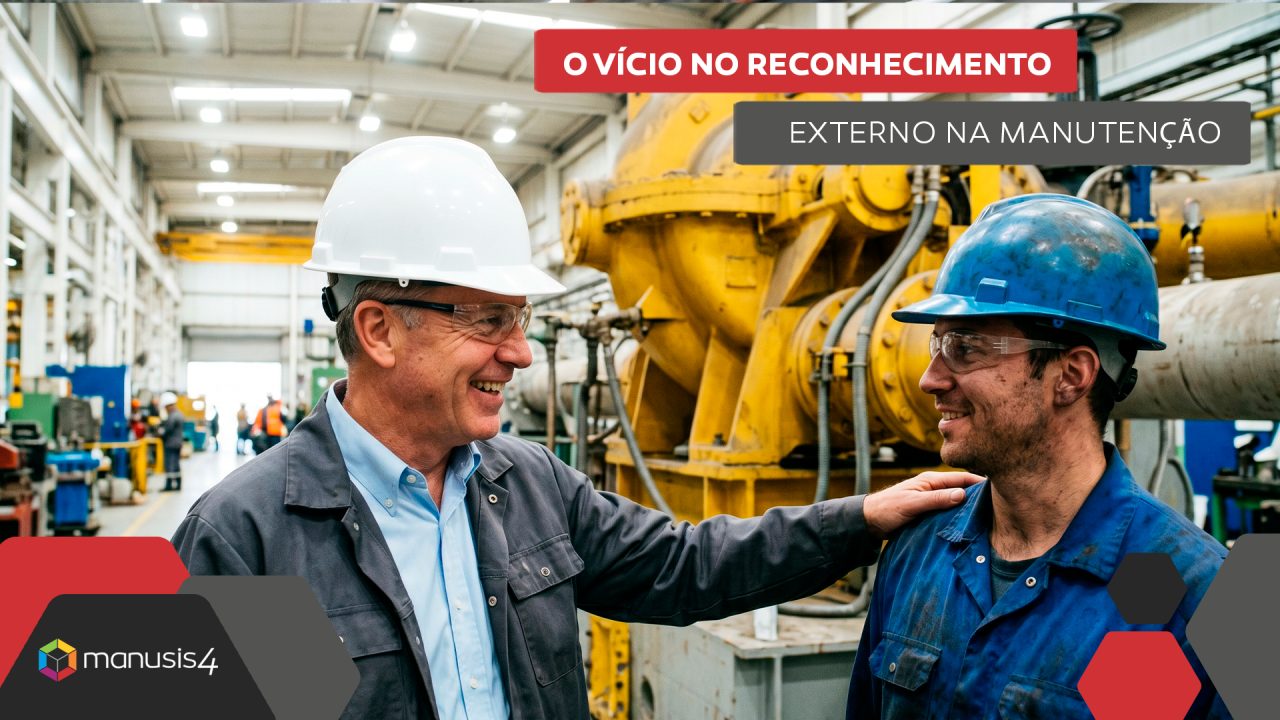
👏 The praise that hooks you, and the silence that destroys
There's a silent saboteur operating inside many maintenance professionals.
It doesn't show up in training.
It isn't in the job description.
It isn't on the org chart.
But it drives decisions, behaviors and even day-to-day output.
This saboteur goes by a simple name:
Dependence on external recognition.
It's that inner voice that whispers:
- "Did I do a good job?"
- "Did my manager notice?"
- "Why didn't anyone say anything?"
- "When am I going to be valued?"
And when the praise doesn't come…
motivation collapses.
output drops.
pride in the work fades.
👉 It's as if the professional's energy came from the outside in, not from the inside out.
Why is maintenance especially vulnerable to this?
Think about it:
Technicians grow up in a culture where:
- mistakes are punished on the spot
- getting it right is seen as an obligation
- "doing what you're supposed to do" is the expected standard
- nobody celebrates a work order closed on time
- but everybody remembers the one that ran late
And so the professional internalizes:
👉 "No matter how much I deliver, they only remember me when I screw up."
That pattern, repeated for years, creates an emotional hole.
And that hole starts being filled by an endless hunt for outside praise.
When it comes: momentary relief.
When it doesn't: anguish, discouragement, a feeling of invisibility.
What NLP shows us about this
Neuro-Linguistic Programming works with a powerful concept:
Locus of control.
There are two types:
- External locus: "I'm worth what they say I'm worth."
- Internal locus: "I'm worth what I recognize in myself."
The professional hooked on external recognition lives in an external locus.
And that has serious consequences:
- self-esteem becomes hostage to other people's opinions
- mood swings with the day's feedback
- important decisions depend on other people's approval
- initiative drops (after all, "if nobody's going to notice, why bother?")
The professional with an internal locus, on the other hand:
- delivers well because that's their standard
- recognizes their own work even in silence
- doesn't need applause to stay motivated
- decides clearly, even under pressure
👉 Shifting from an external to an internal locus is one of the most liberating transformations a professional can go through.
The invisible costs of this dependence
When the addiction to recognition sets in, individually or across a team, the effects run deep:
- Talented professionals quit because they feel "invisible"
- Leaders burn out trying to please everyone
- Technical decisions are made with an eye on what the boss will think, not on what the asset needs
- The environment becomes a "competition for attention" disguised as professionalism
- Innovation dies, because nobody risks anything that won't earn guaranteed applause
And the most serious symptom:
👉 The professional loses touch with the quiet pride of their own work.
And without that pride, nothing holds them up on the hard days.
Where does Manusis4 come in as an ally in this shift?
Here, technology does something powerful that few people notice:
It gives professionals back the ability to see, with their own eyes, the value of what they deliver.
How?
✔️ A clear history of work orders completed on time
✔️ Individual and team KPIs updated in real time
✔️ Visibility of how each maintenance job affects asset availability
✔️ Records of improvements proposed and implemented
✔️ Dashboards that show individual and collective progress
When a technician opens Manusis4 and sees, in black and white, what they delivered this week, this month, this quarter…
👉 they stop depending on the manager's praise.
👉 they build self-esteem based on facts, not opinions.
The system stops being just a CMMS.
It becomes a mirror of internal recognition.
The turning point
You don't have to stop liking praise.
Praise matters. Recognition is essential.
But the addiction kicks in when you start needing it to feel competent.
The emotional maturity of a maintenance professional starts with a simple sentence:
"I know the value of what I deliver, even when nobody sees it."
And that sentence changes everything.
Because it takes the power over your self-esteem out of other people's hands…
and gives that power back to you.
A simple practice to reprogram this dependence
Put the "3-deliveries journal" ritual in place:
- At the end of the shift: write down 3 things you delivered today
- Without judging whether they were big or small: just acknowledge they happened
- Before closing the notebook: read them quietly and say: "this was my work today, and it was done well"
This exercise seems simple. But it does something profound:
👉 It teaches you to recognize yourself before others do.
👉 It creates an internal source of value nobody can take away.
👉 It frees you from the anguish of "did they notice?"
In 30 days, the effect is visible.
In 90, the shift is structural.
This week's reprogramming
"My value isn't in what people say about my work. It's in what I know about my work."
Repeat that sentence when you arrive.
Repeat it when you leave.
Repeat it when praise doesn't come.
And repeat it, above all, when praise does come, so you don't lose yourself in it.
To wrap up
Addiction to external recognition is one of the biggest invisible pains of maintenance professionals.
It disguises itself as:
- "wanting to grow"
- "needing feedback"
- "seeking to be valued"
But deep down, it's emotional hunger.
And that hunger can only be cured one way:
👉 By learning to recognize yourself first.
When the technician, the supervisor, the manager, any professional,
builds an internal foundation of self-worth…
they deliver more.
suffer less.
lead better.
and don't fall apart when the silence comes.
Because, at the end of the day:
The best recognition you can receive is your own.