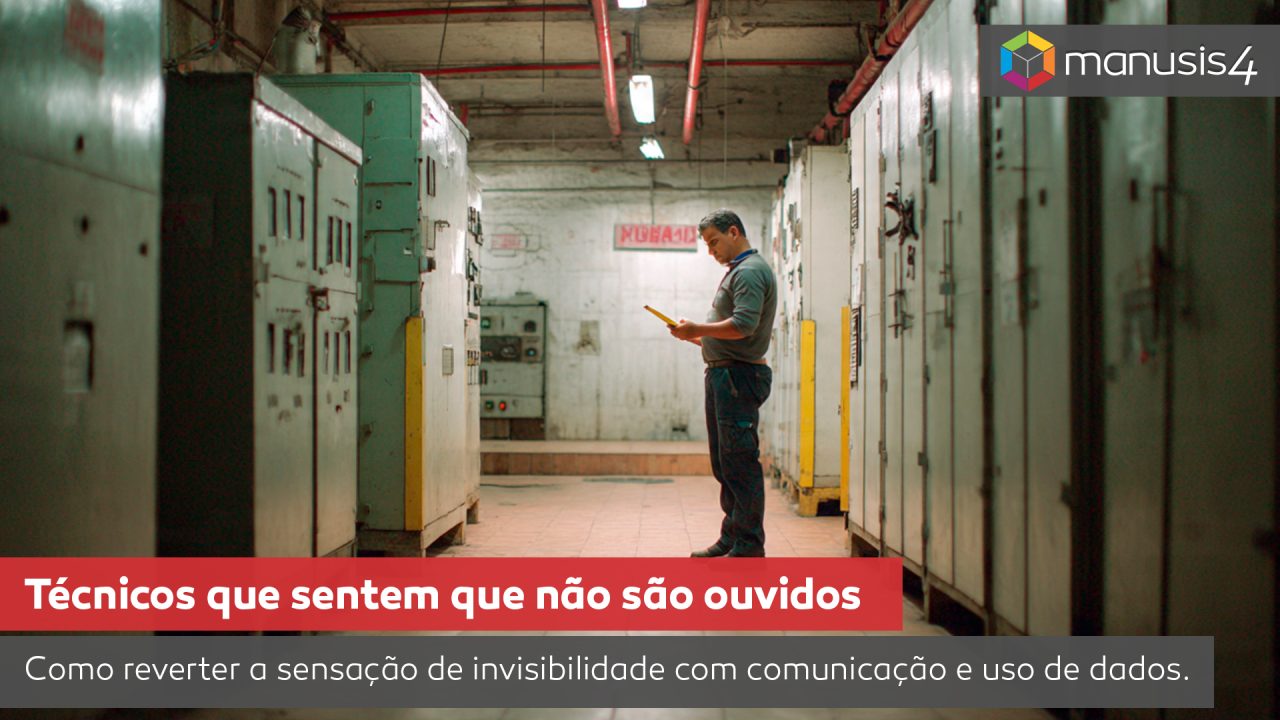
🫥 "Why bother speaking up? Nobody listens anyway."
That line is almost never said out loud.
But it echoes quietly through many technical teams.
The technician executes.
Solves.
Figures it out.
Delivers.
But feels that:
- their suggestions go nowhere;
- their warnings are only remembered when something breaks;
- their effort is invisible;
- their voice doesn't matter.
👉 And when someone feels invisible, they stop contributing, even while they're still there.
What does NLP reveal about this?
Neuro-Linguistic Programming shows that:
Human beings need to feel they have an impact.
When the mind concludes that:
❌ "there's no point in speaking up"
❌ "nobody takes it seriously"
❌ "they decide everything without us"
It switches into self-protection mode:
- excessive silence
- cynicism
- apathy
- passive sabotage
- "I'll just do the minimum"
It isn't laziness.
It's emotional disengagement.
The common leadership mistake
Mistaking silence for alignment.
A quiet team is not a healthy team.
Most of the time, it's a team that has given up on being heard.
How do you reverse the feeling of invisibility?
- Listen with consequences
Hearing isn't enough.
You have to show what was done with what was said.
- Turn opinions into data
When a comment becomes a number, it gains weight.
- Put technical contributions on stage
Show publicly when a suggestion prevented a failure, a cost or rework.
- Swap "who decides" for "who contributes"
The more people think, the fewer people go silent.
Where does Manusis4 come in as an ally?
Manusis4 gives technicians a voice without having to raise their hand.
✅ History shows who raised the alarm first
✅ Data proves what the field perceives
✅ Reports turn "gut feeling" into argument
✅ Dashboards show the real impact of technical work
➡️ When technicians see their records turning into decisions,
they understand: "I'm part of the game."
✍️ Today's reprogramming:
"My voice has value.
My work creates impact.
I am part of the decisions."
Conclusion
Invisible people don't innovate.
They don't engage.
They don't stay.
Giving the technical team a voice isn't a courtesy.
It's a performance and retention strategy.
Next week, we'll talk about the signs that the mind is at its limit, and how to avoid a silent collapse.