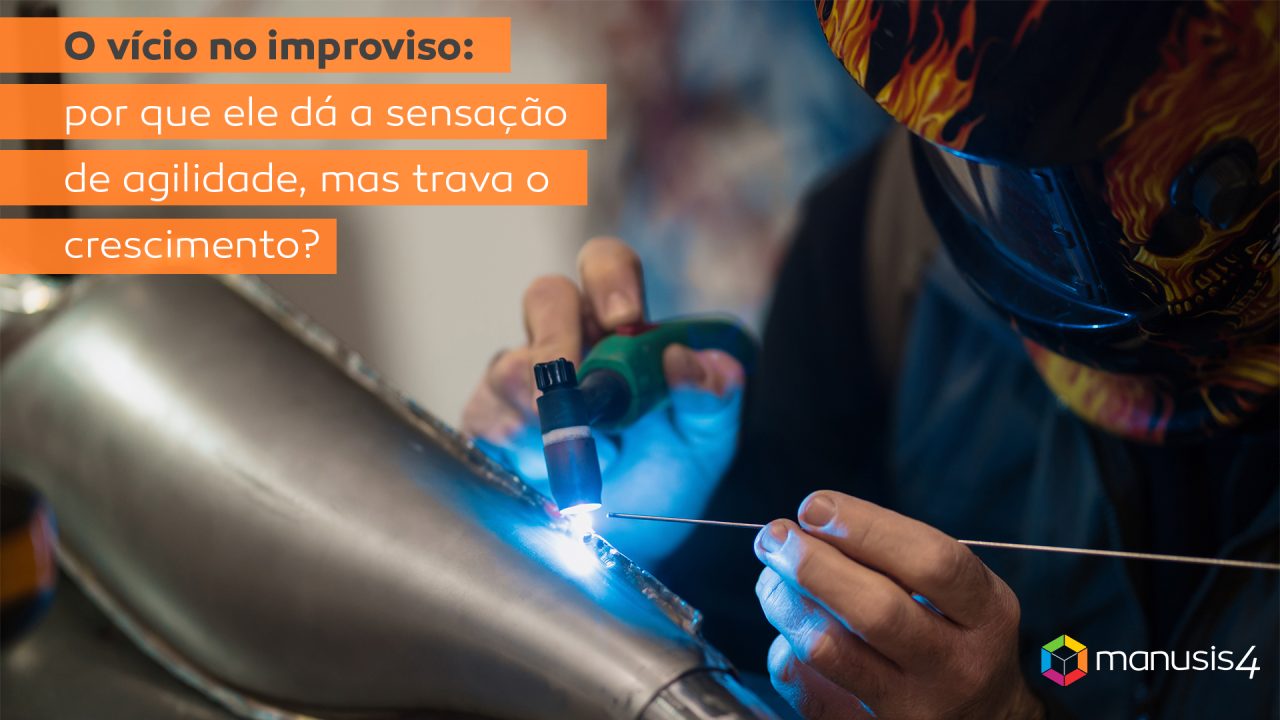
You know that technician who's "great at fixing any breakdown"?
Or the supervisor who "solves it by yelling"?
Or the manager who's proud of "not needing paperwork or a system"?
Yes, they're valued.
But what few people realize is that many of them are addicted to improvising.
And over time, that turns into a silent trap.
🧠 Improvising is necessary. Living on improvisation is destructive.
At first, improvising looks like agility:
➡️ The work order gets done fast.
➡️ The customer is happy.
➡️ The problem gets solved.
But in its shadow come:
- No standards
- Dependence on specific people
- Rework piling up
- Lost history
- Trouble training the team
- And a team that doesn't grow, because nobody documents, shares or plans
What does NLP teach about the addiction to improvising?
The unconscious mind gets hooked on instant reward.
And in the short term, improvising brings emotional relief and an ego boost.
"I fixed it!"
"Once again, I saved the operation."
"See how good I am at this?"
The problem?
That pattern becomes identity:
⚠️ "If I plan, I'm not agile."
⚠️ "If I build structure, I lose my place."
⚠️ "If I teach, I'm no longer indispensable."
How do you break this unconscious pattern?
- Value what's invisible
Planning, standardizing, documenting and training don't shine in the moment. But they shine in future results.
- Make improvising the exception, not the rule
Start the day with structure and allow improvisation only where it's unavoidable.
- Change your inner line
From:
"I'm good at solving things in chaos."
To:
"I'm even better when I avoid chaos."
How does Manusis4 help with this shift?
✅ It creates structure without bureaucracy
✅ It centralizes information and history
✅ It helps you anticipate before you have to run
✅ It organizes the routine simply
✅ It reduces dependence on "operational heroes"
💡 With Manusis4, the team doesn't become hostage to improvisation.
It becomes a benchmark for organization.
✍️ Today's reprogramming:
"Today I choose to anticipate, not just react.
Because planning is the clearest sign of operational intelligence."
Conclusion
Improvising should be a resource, not a lifestyle.
If you live putting out fires, maybe you're addicted to the smoke.
Next week, we'll talk about the invisible guilt of mistakes, and how to deal with technical failures without carrying unnecessary weight.