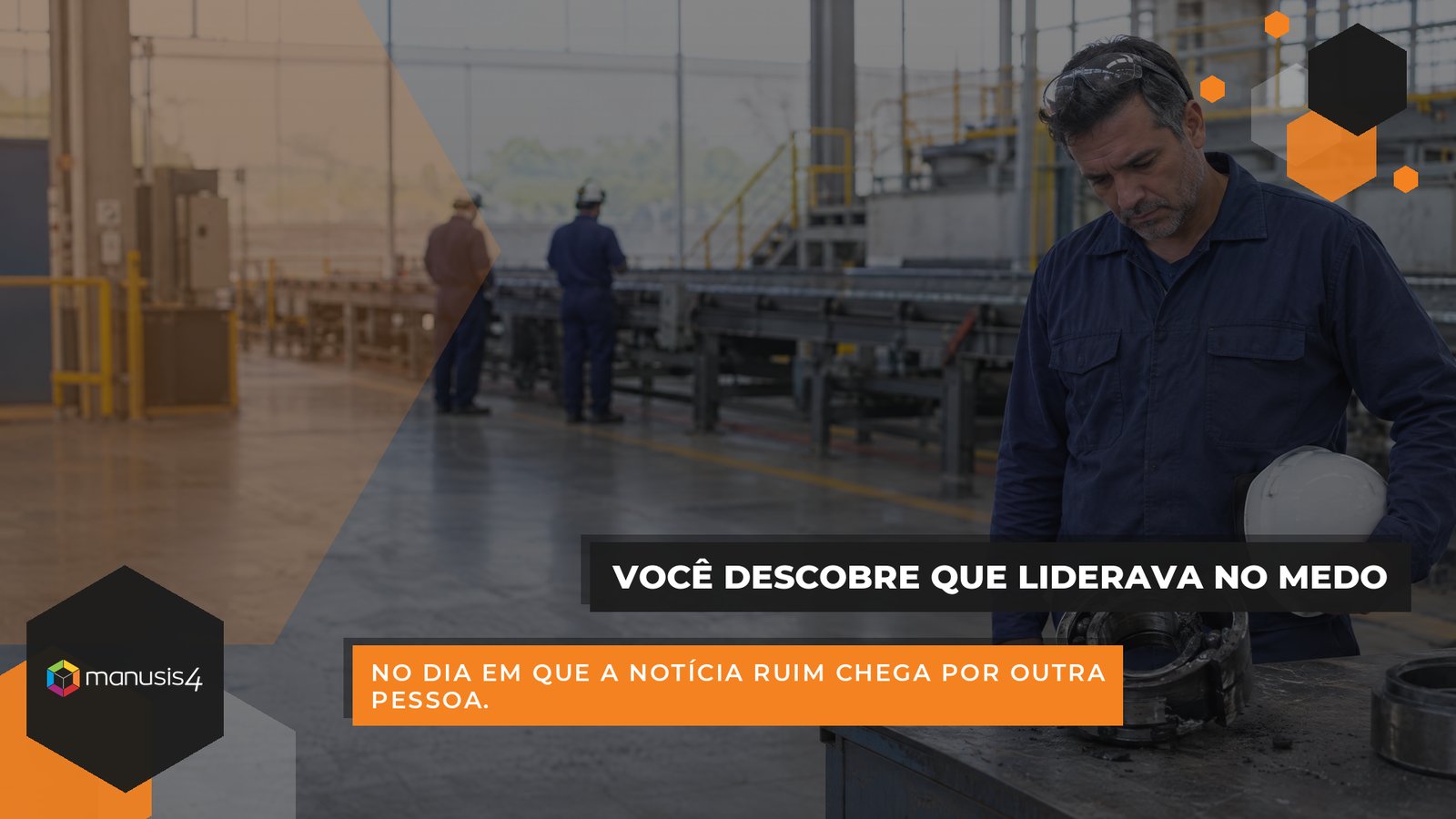
The bearing seized at three in the morning. Line down, production calling, leadership asking questions.
During the investigation, a detail surfaces that hurts more than the downtime: the shift technician heard the noise three days earlier. He heard it, thought it was odd, and said nothing.
You ask why. No one answers. Until someone, staring at the floor, says quietly: "Last time someone spoke up, they got chewed out in front of everyone."
At that moment, the failure stops belonging to the bearing. It becomes yours.
Last week we closed Block 10 talking about how people adopt a system. Starting today, the camera turns to the other side of the table: the leader. And we begin with the most uncomfortable day in any manager's career.
🔧 In maintenance, pressure gets passed down the line
Almost every maintenance manager I know came up from the shop floor. And almost all of them learned to lead the same way: by watching how they were led.
The culture of our field was forged in urgency. A stopped machine loses money by the minute, and the first question you hear in the meeting after a breakdown is almost always the same: "Who did this?"
The pressure cascades down. Leadership squeezes production, production squeezes maintenance, the manager squeezes the team. Each one passes on what they received, believing they are protecting the plant.
👉 No one chooses to lead through fear. We inherit it — and pass it on without noticing.
And there is a cruel trap: fear works in the short term. The team hustles, the ticket gets closed, the week's metric improves. The manager concludes that pressure gets results and pushes harder.
In thirty years of maintenance, I have seen this pattern in plants of every size. And I don't know a single honest manager who has never gone through it, even if only for a season.
👉 Fear buys obedience in the short term and charges interest in silence over the long term.
🧠 What your team learns when you speak
There is a simple principle that changes how you see yourself as a leader: what you communicated is not what you meant to say. It is the reaction you caused.
You may have yelled "because you care about the plant." The team heard something else: "Whoever brings a problem becomes the problem." And they adjusted their behavior to what they heard, not to what you intended.
👉 To your team, your intention is invisible. Your reaction is the manual.
There is a second point: emotional state is contagious. A manager who walks into the 7 a.m. meeting tense doesn't need to raise their voice. Their shoulders have already delivered the message, and the whole room starts weighing every word.
And the third, the most freeing one: you can separate the behavior from the person. "Who broke it?" looks for someone to blame. "What happened?" looks for a cause. The first question shuts the team up. The second opens the asset history.
The epiphany, when it comes, is almost never about other people. It is realizing that the pressure protected you more than it protected the plant: your own fear of being called out upstairs, passed downstairs under another name.
👉 Leading through presence is not about being soft. It is about being close enough for bad news to reach you early.
⚠️ Signs your team is afraid of you
None of them shows up in a results meeting. All of them show up on the floor:
- Bad news reaches you through third parties. You hear about the failure from production, from the customer, or from leadership, never from your own team.
- Records go generic. Work orders closed with "normal wear," "adjusted," or "checked," with no cause, no photo, nothing that could be used against anyone.
- The meeting is a monologue. You ask "any questions?" and silence answers.
- No one suggests improvements. A new idea means extra work and exposure; people who are afraid do only what they are told.
- Near misses disappear. If no one got hurt, nothing happened. Until the day someone does.
- Your best people ask to leave. A good technician has options, and almost always goes where they can make mistakes without being humiliated.
👉 Fear doesn't reduce failures. It reduces the reporting of failures.
🛠 What the system shows — and what it can't fix
From my side of the table, a lesson that cost me dearly: the system only records what people feel safe enough to record.
Manusis4 keeps the history of every asset: who opened the work request, when, what was found, and what was done. The mobile app accepts photos and voice in the field, which takes away the technician's typing excuse. And reliability indicators such as MTBF, MTTR, and rework look at the asset and the process, not at the badge. When the conversation starts from the history, the question naturally shifts from "who?" to "what keeps repeating?".
But I need to be frank about what no software does. It does not create safety. If the dashboard is used to expose someone in a meeting, the team quickly learns to feed the dashboard only what doesn't cause trouble. And then you end up managing beautiful data from a plant that doesn't exist.
👉 A metric used as a whip learns to lie.
💡 Five moves to trade pressure for presence
- Change the first question. After any failure, your first sentence is "what happened?". The "who" may come later, if it is needed. Never first.
- Thank people for bad news, especially when it comes early. "Thanks for telling me before this turned into downtime." Out loud, in front of everyone. That is how the team learns that speaking up pays off.
- Speak last. In your next meeting, open with a question and hold your opinion until the end. Whoever speaks first sets what others have the courage to say.
- Share one of your own mistakes. A decision you made that went wrong, and what you learned from it. A leader who never makes mistakes teaches the team to hide them.
- Measure the bad-news delay. For the next failures, write down how much time passed between someone on the team noticing the problem and you finding out. That number says more about your leadership than any employee engagement survey.
👉 The time it takes bad news to reach you is the most honest indicator of your leadership.
🧠 This week's reprogramming
Think about the last serious failure in your area. Now answer honestly: who told you? And how long after someone on the team already knew?
If the answer made you uncomfortable, good. That is where it starts.
A team that's afraid doesn't fail less. It just stops telling you.
This week, when the first piece of bad news arrives, hold your reaction for five seconds and say just one sentence: "Thank you for telling me." Then watch who brings you the next one.
📣 Next week
We opened Block 11 with the turning point. But a turning point without measurement becomes a New Year's resolution.
👉 In #70, an indicator that doesn't show up on any dashboard and that every technician feels firsthand: the leader's self-awareness, and what it does to the team's "emotional MTBF".
Until then.