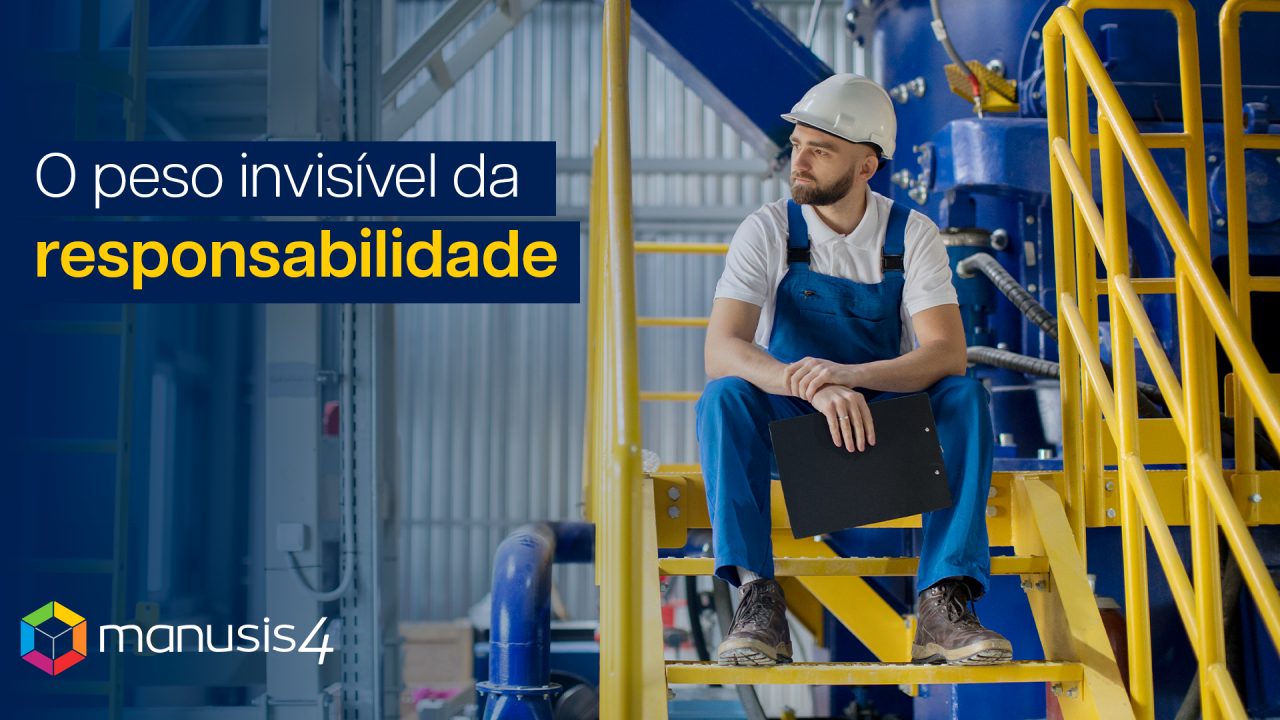
If you work in maintenance, facilities or asset management, you may have felt it:
🧱 a weight nobody sees, but you carry every single day.
It's the weight of knowing that if a machine goes down,
if a job runs late,
if a piece of equipment fails,
👉 it's on you.
That burden doesn't arrive with a bang.
It creeps in slowly.
And by the time you notice, your shoulders are tight, your body is tired and your head is full, before the day has even started.
💣 What almost nobody talks about is that this emotional load, when it goes unrecognized, becomes a ticking time bomb.
- Constant irritability
- No patience with the team
- Poor sleep
- Technical procrastination
- Excessive self-demand
- A feeling that it's never enough
🧠 And the most curious part?
Much of it doesn't come from the task, but from unconscious programming.
What does NLP say about this?
The mind builds an emotional association with the role of "being responsible for everything".
In many cases, that comes from beliefs like:
- "If something goes wrong, it's my fault."
- "I can never make a mistake."
- "If I'm not at 100%, everything falls apart."
- "I'm the pillar. I can't show weakness."
These lines may have been learned long ago, in childhood, from demanding parents or rigid environments.
Today, they act as invisible internal commands that create constant tension, and mental exhaustion.
How do you ease the weight without giving up responsibility?
- Recognize it: feeling tired isn't weakness.
Asking for support, delegating and pausing are acts of emotional intelligence.
- Reprogram the internal command.
Replace self-sabotaging lines with statements of balance:
"I give my best, but I don't carry everything alone."
"My responsibility is big, but my well-being is bigger."
"Planning and delegating make me stronger."
- Use Manusis4 as an extension of your mind.
✔️ It records.
✔️ It remembers.
✔️ It delegates.
✔️ It follows up.
✔️ It frees you from the weight of trying to keep everything in your head.
What used to be "my responsibility" becomes the process's responsibility.
Conclusion
You don't need to be an exhausted hero.
You need to be a conscious professional, with the tools and clarity to balance delivery with mental health.
Because, at the end of the day, the most important machine you take care of… is you.
Next week, we'll talk about firefighter syndrome, and how it sabotages the evolution of the field.