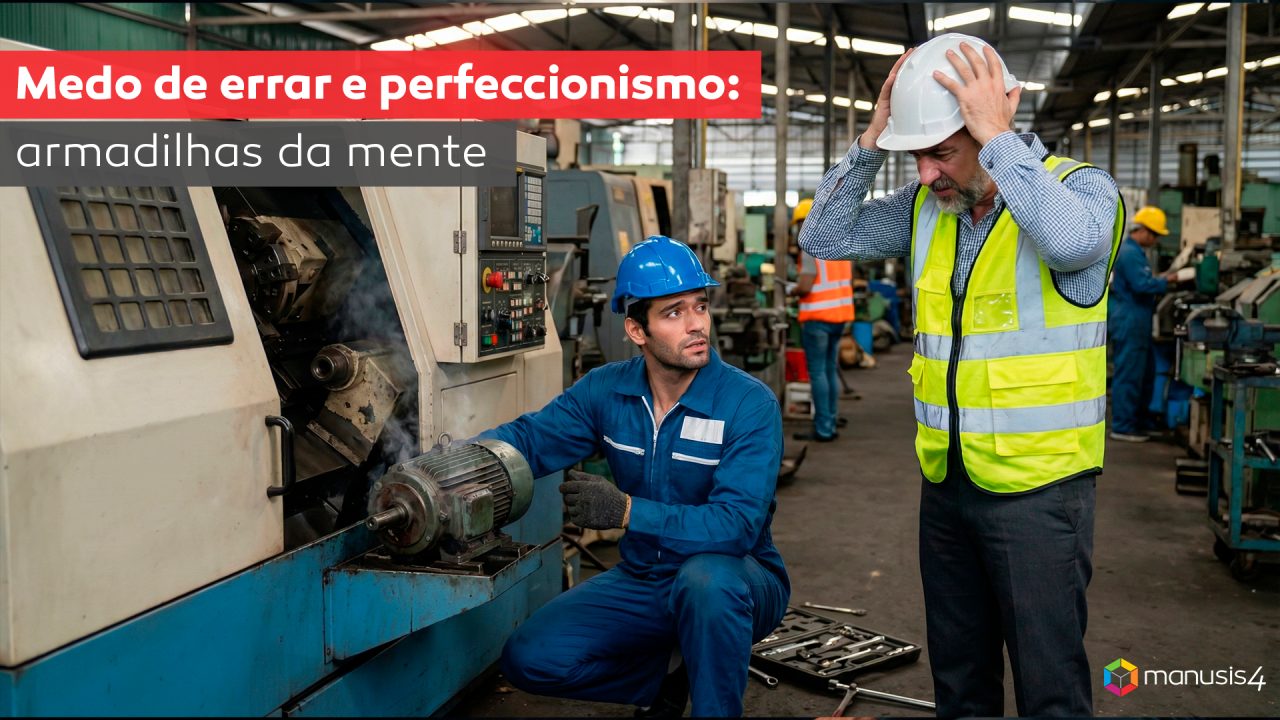
⚠️ "I can't make a mistake."
How many times has that line echoed in your head?
Or worse: how many times have you seen your team frozen, slow to act, afraid to make any decision?
Perfectionism isn't a sign of excellence.
It's a sign of fear.
And that fear comes from an unconscious belief:
👉 "If I make a mistake, I'll be punished."
Why is this so common in maintenance and facilities?
Because in these areas:
- mistakes are visible and traceable,
- there's pressure for uptime and response time,
- there's a history of silent punishment,
- and technicians are held to the standard of being infallible.
The result?
Technicians who put things off, leaders who avoid innovating, teams that stick to the basics because they're afraid of failing at something new.
The problem with perfectionism
- It slows things down.
- It blocks creativity.
- It raises stress.
- It disconnects the team from reality.
In practice, it's a kind of self-sabotage disguised as responsibility.
What does NLP teach about this?
NLP shows that unconscious beliefs shape our behavior.
If the mind believes "mistake = failure = rejection," the body freezes, avoids, and procrastinates.
But when we reprogram that to:
"Mistake = learning = growth"
…the mind allows itself to take risks, test, correct, and grow.
How does Manusis4 help with this?
With Manusis4:
- The technical history shows that nobody has to start from scratch.
- The failure log becomes a basis for learning, not a reason for punishment.
- The team understands the process clearly and can make decisions with more confidence.
- Well-defined work orders shrink the margin for error and the fear of "getting it wrong in the dark."
➡️ When technology supports action, fear gives way to confidence.
✍️ Today's reprogramming:
"I give myself permission to make mistakes and learn.
My growth begins where fear ends."
Conclusion
We don't want a perfect team.
We want a team that makes mistakes, learns fast, and grows together.
Next week, we'll talk about how to create a lighter emotional climate in the technical department.