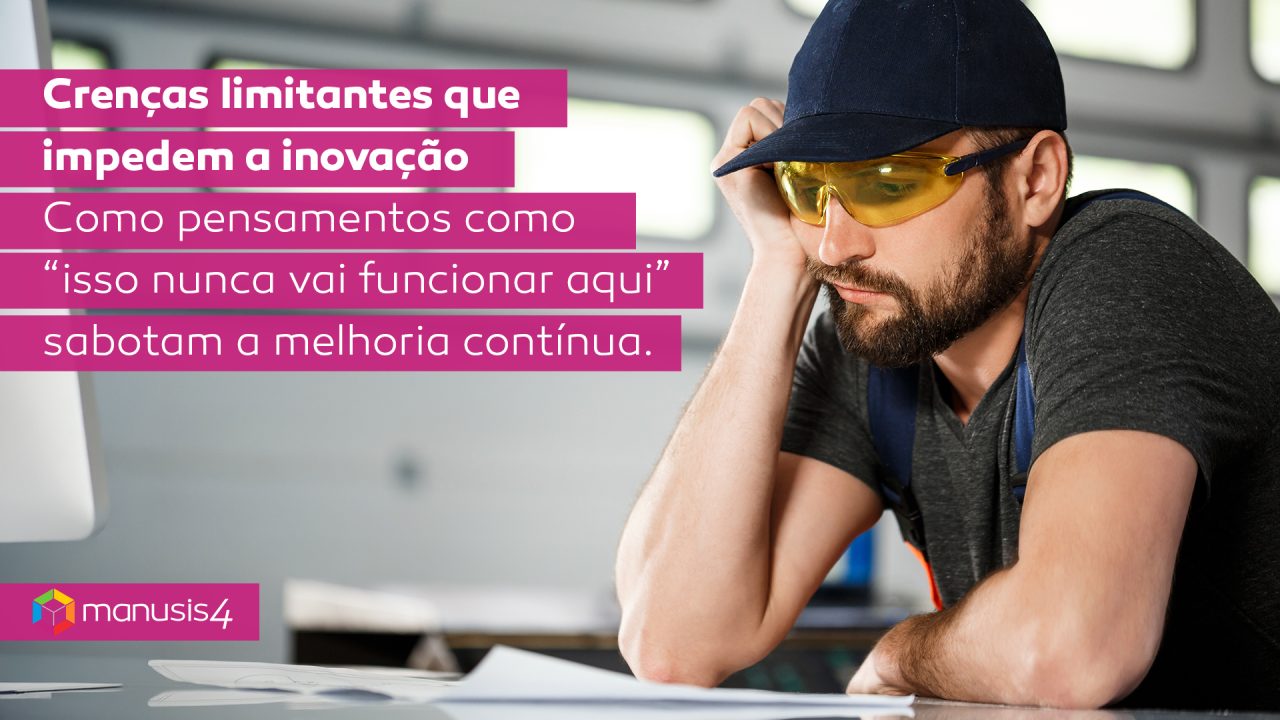
🧱 "It's always been done this way here…"
"That's never going to work here…"
"It sounds great in theory, but it doesn't work in practice."
These lines seem harmless.
But when they become a group chorus, they build an invisible wall that blocks any progress.
That wall has a name:
Limiting belief.
What are limiting beliefs?
In Neuro-Linguistic Programming (NLP), beliefs are mental programs that define what is or isn't possible.
Limiting beliefs are the ones that:
- stall action,
- reinforce old patterns,
- and keep the new from taking root.
Classic examples in technical areas:
- "Nobody's going to use this system."
- "Management only demands; it never supports."
- "Around here, everything runs on improvisation anyway."
- "No point suggesting anything; nobody listens."
- "If you try to innovate, it just creates more work."
The silent impact of beliefs on teams
These thoughts sound "realistic," but they're emotional filters.
They lead to:
- Resistance to new technology
- Rejection of new processes or checklists
- Apathy toward training
- Unconscious sabotage of ideas
- Collective demotivation
➡️ The result: innovation dies before it's born.
What does NLP teach to deal with this?
NLP works by reprogramming beliefs:
- Identify the line that reveals the belief
E.g.: "Nobody's going to use Manusis4…"
- Ask: is that always true, with everyone?
Challenge the generalization.
- Replace it with an empowering, realistic belief
➡️ "If we show the value, the team will get on board."
➡️ "It's possible to improve little by little."
➡️ "There's always someone willing to try."
And where does Manusis4 come in?
Innovation without a system is opinion.
But innovation with data is an argument.
✅ Manusis4 helps break beliefs with facts:
- Dashboards that show real progress
- Reports that reinforce operational improvements
- Evidence that "yes, things are changing"
- Visibility that builds confidence to try the new
➡️ As you show that the new brings results, resistance loses its grip.
✍️ Today's reprogramming:
"I make room for the new.
Change starts with me.
And my example inspires the people around me."
Conclusion
Every innovation starts with a "what if…?"
But it takes courage to break the "it's always been done this way."
Next week, we'll talk about the body's signals that show when the technical environment is affecting the team's mental health.